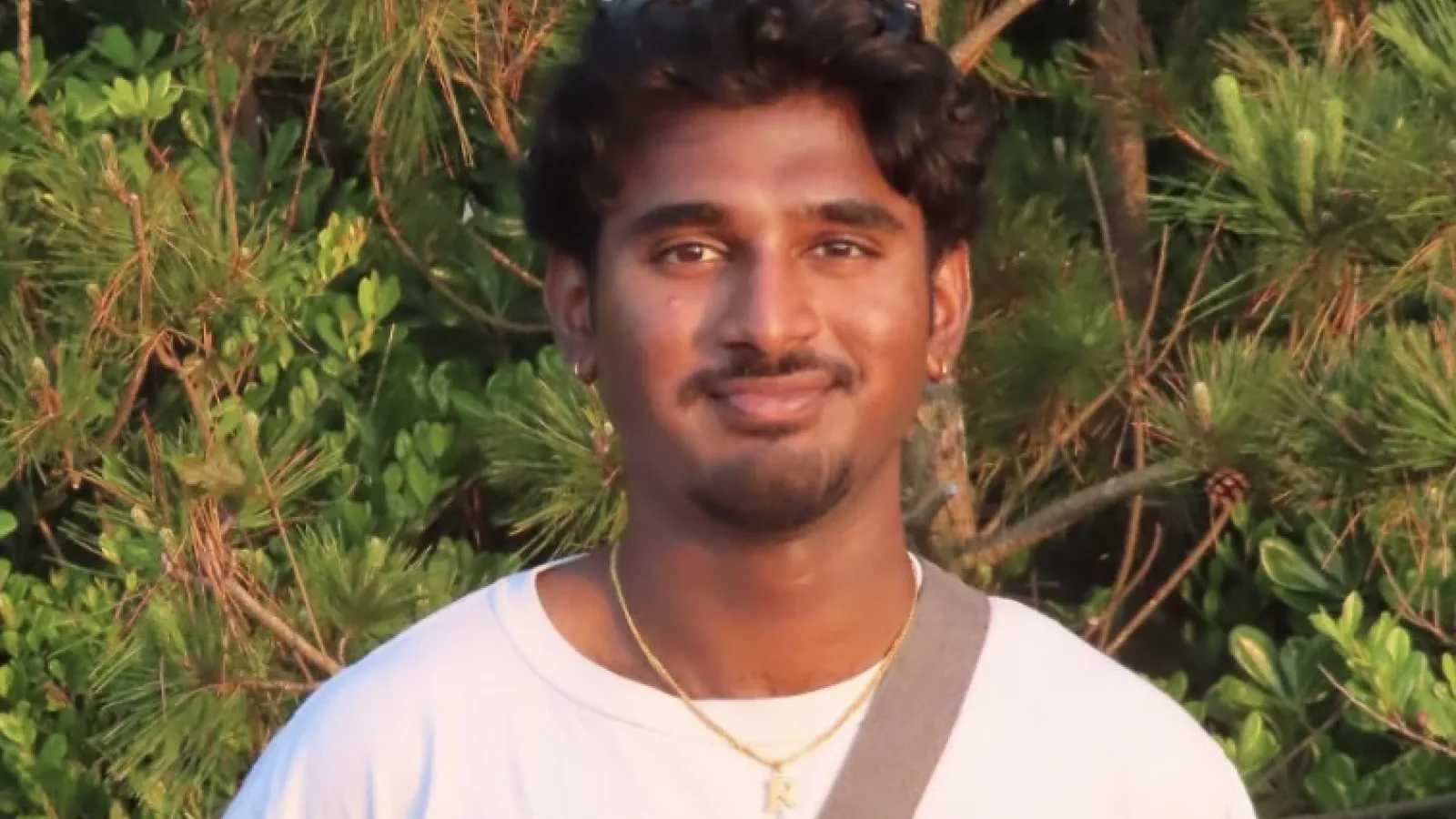
Science and Technology Studies Spotlight: Conversation with Students

How do students come to question their relationship with technology? In this interview, Ryan reflects on his path from a STEM-focused background to engaging deeply with Science and Technology Studies (STS). He shares how his independent study on digital disconnection led him to think more critically about technology’s role in shaping everyday life, and why he believes STS offers valuable perspectives for students across disciplines.
1. Can you briefly introduce yourself?
Hi everyone, my name is Ryan Sivakumar. I’m a third year undergraduate student majoring in Neuroscience and minoring in STS. I first got involved with STS by taking Dr. Liliana Gil’s class “Introduction to Cultures of Science and Technology”. To be frank, I took up this minor on a whim. I wasn’t sure what to expect, but I’m glad I took Dr. Gil’s course and continued with this minor. I have always been STEM oriented, but I had never critically analyzed how these technologies connect back to people and impact us.
2. What course, independent study, or project are you currently working on (or recently completed)?
I’m currently working on an independent study about digital disconnection. I got interested in this topic because I would often find myself or observe others disconnecting from social media and their devices. I had several conversations with my friends about digital disconnection and found that the reasons that motivated them to disconnect were entirely different from mine. So, I started to study this phenomenon: the motivations, the practices, and implications of disconnection.
3. What surprised you most about studying AI or STS?
I was surprised at the extent at which technology shapes us and our interactions. On the surface, that notion was clear, but reading the theories and papers about it opened my eyes to how all technologies have changed us and our everyday lives. My greatest challenge was overcoming and becoming a researcher in humanities. My earlier education was so engrained by technical facts and details from hard science courses that it was difficult to approach these topics with an open mind and understanding. However, by immersing myself in these topics, I was able to gain a broader understanding not only in how these technologies function, but how they change us.
4. How does studying STS or AI, Ethics, and Society feel different from other classes in your major?
Studying STS is worlds different than what I learn in my major. My major courses are rather narrow in scope whereas my STS courses have been very broad and can apply to many other things that I study and experience. One paper that stuck with me was Langdon Winner’s Do Artifacts Have Politics? This piece was pivotal in my understanding of meaning making, technology as an actor in politics and society, and science being a tool that is not completely rid of prejudice and bias. I also enjoyed the piece Hail the maintainers by Andrew Russell and Lee Vinsel. It made me appreciate how the privileges of fast internet, clean buildings, and accessible water only persisted because of the maintainers. It made me think about how custodial and maintenance work was often looked down upon, when in reality, those roles are the most integral to maintain functioning in everyday life.
5. Can you share a project, paper, or assignment you’re especially proud of?
I don’t want to overshadow all the meaningful projects I did in my various STS classes, however this current project I’m doing has been my most ambitious and has required great devotion. It’s meaningful to me because I was able to apply what I learned from my previous STS classes on a topic that was of great importance to me. I have learned a great deal about the research process, particularly the struggles, and how to manage my time efficiently. Through this project, I was fortunate enough to make some great connections and learn a whole lot more about the broader humanities and STS landscape.
6. How has this work changed how you see AI or technology in your everyday life?
The main thing I noticed about AI in the context of my research is that it is not nearly as great as the hype made it out to be. I spent so much time trying to fine tune and utilize AI for data analysis, data collection, and various other steps in the research process. I can confidently say that it would be a better use of time and energy to try and critically think and analyze rather than offloading that work to an AI. I found that AI is only helpful in certain use cases. More generally, my work has made me realize how technology and AI now permeates through practically every instance of existence. Our culture is being developed and rapidly disseminated due to social media; AI-generated videos are being used for politics with unknown effects; to have an education it’s a prerequisite to have a laptop or tablet; people make friends and maintain relationships through instant messaging and video calls. I don’t consider myself as a technological determinist by any means, but my concerns about technology grow with each day as new articles surface about the harms of technology and lawsuits.
7. How do you imagine using what you’ve learned in the future, in your career, further study, or everyday life?
I’m planning on going to law school and becoming a lawyer after my undergrad. It’s a seemingly disparate field from STS and my research, however the skills I learned through my research and classes will still be useful in my legal career. The dense articles and perplexing theories that I had to wade through were a great challenge for me and made a stronger reader, writer, and researcher. I’m not sure what type of lawyer I want to become yet, however I do know that I want to work with technology and healthcare. Although these classes aren’t looking at the technical specifications, my education on what undergirds these technologies and seeing the bigger picture of its downstream effects will give me great foresight and help me plan how to tackle tough cases.
8. What would you say to another student who’s curious about STS but unsure if it’s for them?
I would tell them that if they have been curious about why and how things are the way they are and possibly where things might end up, take STS. Technology will only get more advanced and more enmeshed in our everyday lives. These advancements are what made our lives so much different than that of previous generations. It’s hard for us to wrap our heads around, since we are digital natives and didn’t get an experience without all the advanced computing, algorithms, etc. Knowing where we came from, where we are, and where we are headed is something worthwhile to learn about no matter what field you end up pursuing.